Scaffold Design
in 3D
The majority of Node Group scaffold designs include a full 3D model as standard. Built parametrically from the structure being scaffolded, issued alongside detailed 2D construction drawings and structural calculations — wherever the build warrants it, not as an optional extra or upsell.
3D Scaffold Design as Standard
Most scaffold design consultancies issue 2D drawings and treat 3D modelling as an upsell. Node Group does it the other way around. Wherever the build warrants it, the scaffold is built in 3D first and the drawings, sections and elevations are generated from that single source of truth. The 3D model is the design — the 2D outputs are derived from it.
This matters most on the projects where it is hardest to do. Heritage facades with curved geometry, cantilevered platforms at extreme height, hanging scaffolds with no ground bearing, temporary roofs over live structures — these are the projects where a 2D-only design hides problems that only surface during erection. A 3D model exposes them at design stage. For a straightforward tube-and-fitting access scaffold the 2D drawings and calculations are usually sufficient on their own — we are honest about where 3D adds value and where it does not.
Where 3D is delivered, the model becomes a planning, briefing and safety asset for the contractor. Erection crews can see the scaffold in context before the first tube is lifted. Main contractors can federate it against the permanent works for clash detection. Clients can review the design visually without needing to interpret 2D drawings.
What's Included When We Model in 3D
Complete parametric model of the scaffold geometry, materials and connections. Built from the same engineering data that drives the structural calculations.
Plans, elevations, sections and details generated directly from the 3D model. Fully dimensioned and ready for the erection team on site.
Full calculations to BS EN 12811 and TG20. Member checks, foundation loads, tie loads and stability analysis — signed by a chartered engineer.
3D models can be exported in formats compatible with main contractor BIM environments for federated clash detection against the permanent works.
When 3D Scaffold Design Pays Back the Fastest
3D scaffold design is most valuable on projects where 2D drawings cannot fully describe the problem. The following project types regularly justify the modelling effort several times over:
Listed facades, domes, and non-orthogonal buildings where every standard is bespoke and tie positions must be plotted exactly.
Platforms that extend beyond the building footprint — counterweight calculations and member checks against the modelled geometry directly.
Where ground bearing is not available, the hanging arrangement and parent structure connections must be coordinated visually with the building owner.
Apollo, Niko, X-Beam systems modelled in full so clearances, fall directions and rail spans are visible before procurement.
Vehicle and pedestrian gantries where headroom, swept paths and load posting all have to be coordinated in the same model.
Where the main contractor needs the temporary works model federated into the permanent works model for full clash detection.
3D Scaffold Design in Practice
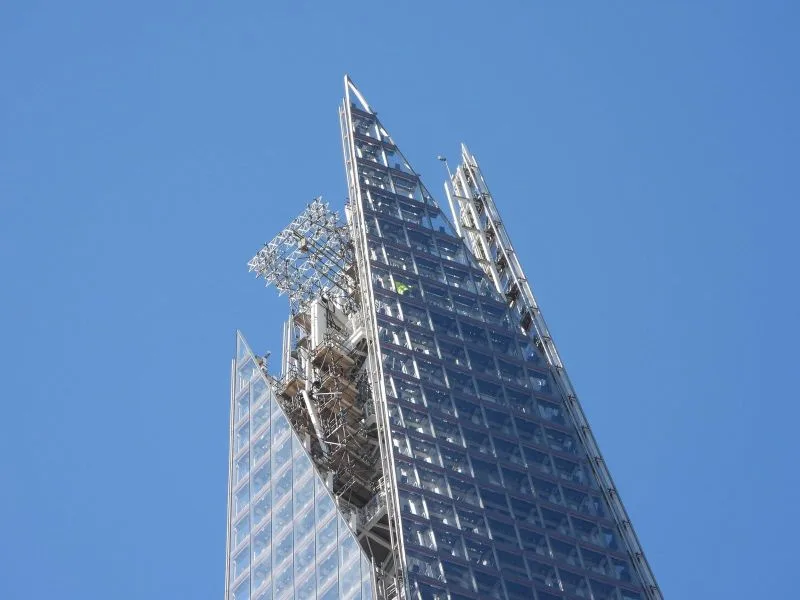
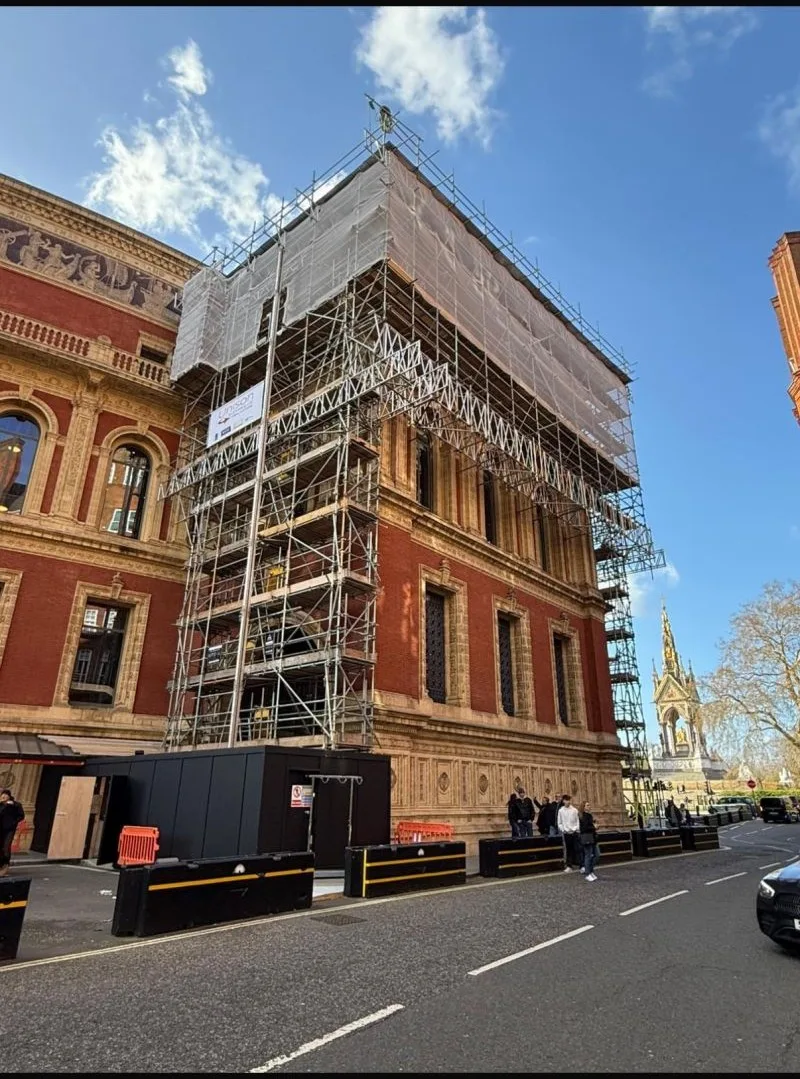
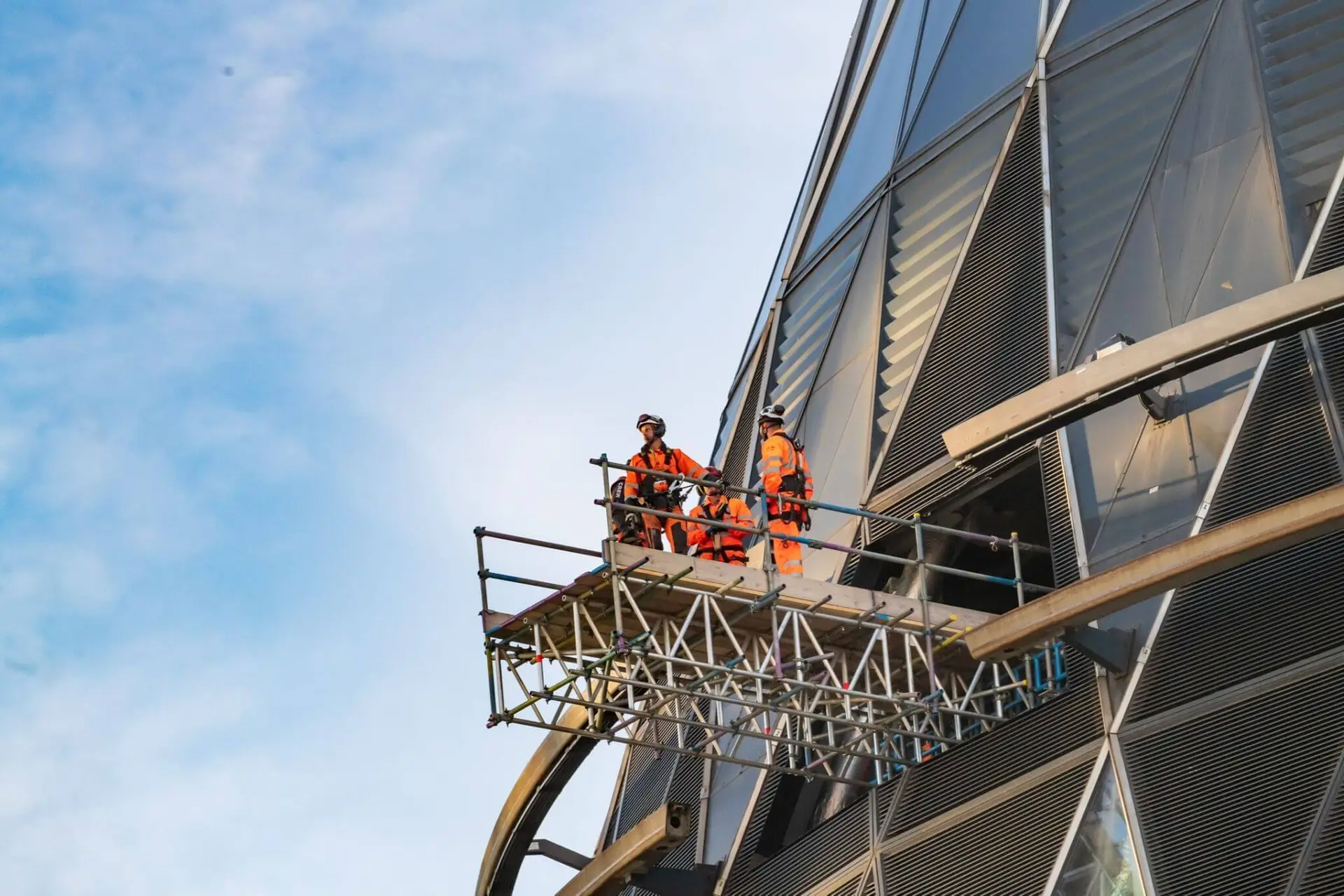
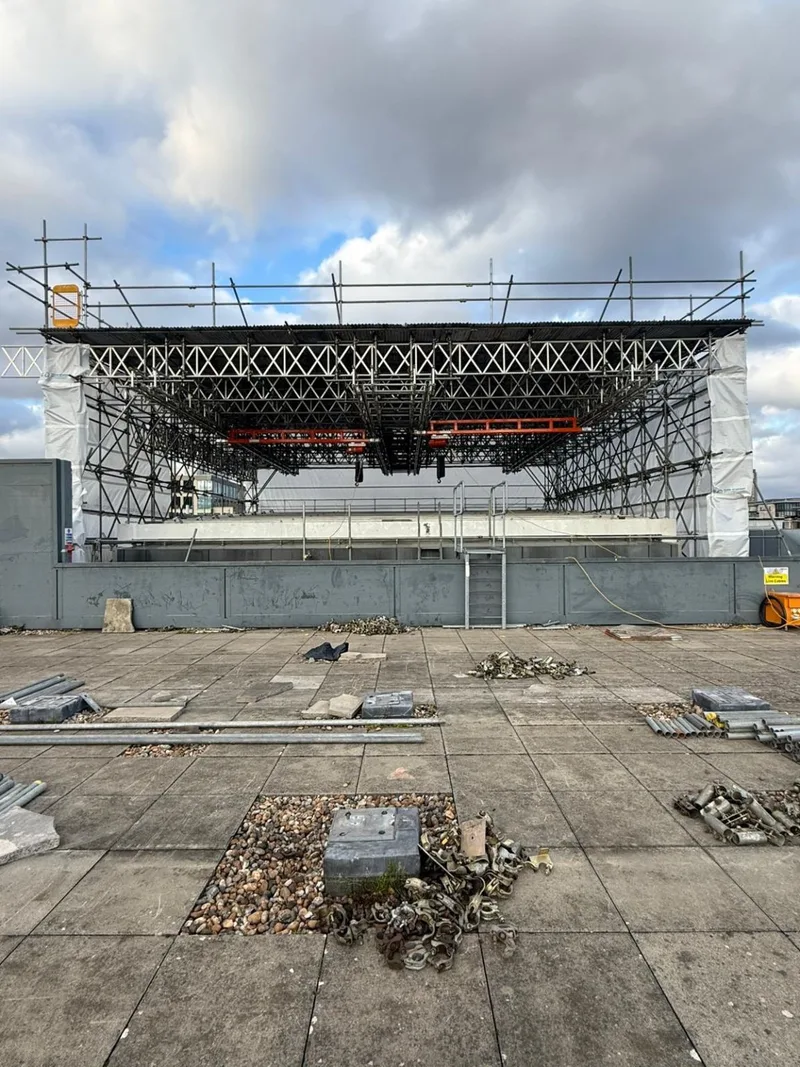
A selection of projects where 3D modelling was central to the design solution — on each of these the 3D model was issued alongside the drawings and calcs as part of the standard deliverable.
Frequently Asked Questions
Do you provide 3D scaffold models?+
Yes. A full 3D scaffold model is issued as standard on the majority of our projects — not as an optional extra and not at additional cost. We model wherever the build warrants it: heritage geometry, cantilevers, hanging scaffolds, temporary roofs, BIM-required jobs and any project where 2D drawings cannot fully describe the design. On simpler tube-and-fitting access scaffolds the 2D drawings and calculations are usually sufficient on their own.
What software do you use for 3D scaffold design?+
Our engineers use industry-standard parametric 3D modelling tools to build scaffold geometry directly from the structure being scaffolded. Models can be exported in common BIM-compatible formats for clash detection against the permanent works.
Why is 3D scaffold design important?+
3D scaffold design lets you see the scaffold in context before it goes on site. Clashes with the permanent structure, access routes, services and adjacent obstructions are caught at the design stage rather than during erection. The site team also gets a complete visual reference alongside the 2D drawings, which reduces ambiguity and rework on complex projects.
Is 3D scaffold design the same as BIM?+
3D scaffold modelling is the geometric core of a BIM workflow. Our 3D models can be issued in formats that integrate with main contractor BIM environments for federated clash detection. Full BIM Level 2 deliverables can be provided where the project requires it.
How much does 3D scaffold design cost?+
Where 3D is delivered, the modelling is included in the cost of the scaffold design — no separate fee, no upsell. It is part of the standard deliverable alongside the 2D drawings and structural calculations on the majority of our projects.